What do state-level differences in school type availability reveal about state priorities in American education?
Introduction
A state’s budget is a moral document. While policy rhetoric often promise “equity for all,” the physical distribution of schools reveals the true priorities of a state’s educational infrastructure. By analyzing the distribution of “School Types” in the dataset (Regular, Alternative, Career, and Special Education) across five states, we can decode the educational philosophies embedded in regional policy choices. The data suggests a sharp divergence in priorities: some states prioritize standardization (investing heavily in “Regular” schools), while others prioritize specialization (creating distinct campuses for vocational and special needs populations).
With the dataset covering 50 states, the focus of this question narrows to 5 states: California, Georgia, Massachusetts, Minnesota, and Texas. Together, these states capture different approaches to education enabling the analysis of education across America.

The visualization immediately reveals disparities in education structure. California and Texas offer a substantial number of alternative education school, reflecting their high population and a corresponding number of students seeking a non-traditional pathway. The absence of Career and Technical schools Georgia and Texas suggests that students in those states either access vocational training within comprehensive “Regular” schools or complete traditional academic programs before gaining practical career preparation.
With regular schools, Massachusetts and Minnesota have relatively the smallest count in comparison to California, Texas, and Georgia. Massachusetts’s small geographic footprint may partially explain its lower count, and the state’s private school sector provides important context. This dual structure reflects potential private funding from the citizens supplementing state funding, in turn generating educational stratification. Minnesota displays a moderate number of regular schools relative to its population size. The state is known for educational innovation including independently operated schools to optimize student-institutional fit. As a result, although we see Minnesota with the smallest number of regular schools, this can reveal that its schools provide innovative education options, and the state prioritizes experimenting with different school models.
Both Minnesota and California offer a noticeable number of special education schools. Minnesota has the highest count (about 238) reflecting the state’s investment in specialized programs for students with diverse learning needs.
Priority of Standardization: Texas & Georgia

The most striking feature of the data is the “Vocational Void.” Both Texas and Georgia list zero distinct “Career and Technical Schools” in this dataset, while maintaining massive numbers of “Regular” schools (over 8,000 in Texas). This reveals a priority of mass standardization over specialized vocational institutes.
By submerging technical training within comprehensive curricula, these states have chosen efficiency. The lack of specialized career schools aligns with the policy shift described by Katherine Hardin, PhD student at McGill University. Following 1990s welfare restructuring, the U.S. embedded a “work-first” philosophy which dismantled programs like Vocational ESL (VESL) that treated students as whole humans needing long-term skills. Instead, states prioritized rapid labor market attachment (Hardin 232). By submerging vocational training into “Regular” schools, Texas and Georgia prioritize immediate efficiency and workforce placement over the human capital development and economic mobility that specialized career schools provide.
The priority of regular schools assumes that standard high schools deliver all forms of education. The “Georgia Computes!” study proves this wrong. Mark Guzdial, a computer science professor at the University of Michigan, documented a state-level computing education intervention that navigated complex policy environments including working with the Georgia Department of Education and Professional Standards Commission to establish computer science curricula and teacher endorsements (2014). When Georgia attempted to introduce computer science, rural and urban-poor “Regular” schools lacked the instituational capacity and trained personnel to implement it, unlike their suburban counterparts (Guzdial and Ericson 545). The absence of specialized “Tech Schools” eliminated natural innovation hubs that could have piloted programs, excluding rural students from the modern economy.

Standardization’s inequities concentrate most severely in rural contexts. Dr. Drescher, a social policy researcher with a PhD from Stanford University, found that while rural students graduate at high rates, they lack access to advanced curricula (AP/IB/dual enrollment) available in specialized or suburban clusters (Drescher et al. 143). By prioritizing a monolithic “Regular School” model, Texas ensures that students in rural West Texas have a school building, but not necessarily the educational opportunity inherent in the specialized programs or instructors found in Massachusetts’s ecosystem.
Priority of Containment: California
California stands out for its massive investment in “Alternative Education Schools” (981 schools) – nearly double the count of Texas, despite comparable population size.
Why does California need so many Alternative schools? Melissa Fahmy (Ph.D. Indiana University, Bloomington) provides the ethical framework through her analysis “Shadow Students.” She writes on the legal exclusion of undocumented students, but her Kantian argument that policies must treat students as “ends in themselves” applies directly to alternative schooling (Fahmy 1060). California’s priority is to remove students deemed “at-risk” from the “Regular” population. By clustering students into “Alternative” sites, the state treats these students as means to an efficient system, rather than as individuals deserving education investment, often warehousing them in environments that lack the rigor of the university track.
As argued in the project’s theoretical framing, the label “Alternative” is a mechanism of the Bureaucratic Imagination. It enables the state to claim service to students while possibly lowering accountability expectations. The sheer volume of these schools in California suggests a priority of management over integration: solving educational problems through spatial segregation rather than resource-intensive inclusion.
The State Education Indicators report highlights that high-poverty schools often struggle with teacher quality and resources (U.S. Department of Education 2). In California, “Alternative” schools frequently overlap with high-poverty populations. The state’s priority, therefore, appears to be poverty’s spatial isolation over the resource-intensive work of integrating these populations into high-performing “Regular” clusters.
Priority of Specialization: Massachusetts & Minnesota
Massachusetts and Minnesota emerge as outliers, showing distinct counts for “Special Education” and “Career” schools alongside a diverse mix of “Regular” (often charter) schools.
Specialization is expensive. Massachusetts’ ability to maintain these distinct clusters is a direct result of its “Foundation Program” and “Chapter 70” aid, which Professor Tyrne Bynoe of St. Bonaventure University describes as a “needs-equalization” formula (Bynoe 1). Unlike the Texas model which standardizes the building, Massachusetts’s priority is fiscal equity in attempts to standardize the spending power and enable tailored environments that cater to learning differences.

Massachusetts’s small geographic size partially explains the lower count of schools, but also reflects their private school sector. Taylor and Cantwell (2019) reveal that private school enrollment patterns in wealthy areas fundamentally shape public school realities. Massachusetts’ substantial investment in “Regular” public schools coexists with private school enrollments in wealthy suburbs like Brookline, Wellesley, and Newton. These affluent communities maintain excellent public schools as community amenities and property value drivers, yet many residents still pursue private schools to enhance their own children’ s likelihood of admission to elite universities. Paradoxically, in states allowing significant local property tax funding, affluent communities can supplement state allocations substantially in turn creating public schools that rival private schools in resources. Geographic sorting by race and class thus shapes educational opportunity before a single student enters a classroom; housing costs serve as invisible gatekeeping mechanisms determining which schools a family can access.
Minnesota’s diversity of school types reflects its historical priority as the birthplace of the charter movement. However, this priority of “choice” creates a new form of inequality. As implied by the Title I Indicators, fragmenting the “Regular” system into many small, specialized types risks diluting the oversight needed to ensure every child, regardless of parental sophistication, gets quality education. The state’s high percentage of special education schools (9.5%) may signal either genuine commitment to serving disabilities or troubling tendencies to segregate rather than include.
From “Freedom Schools” to “School Types”
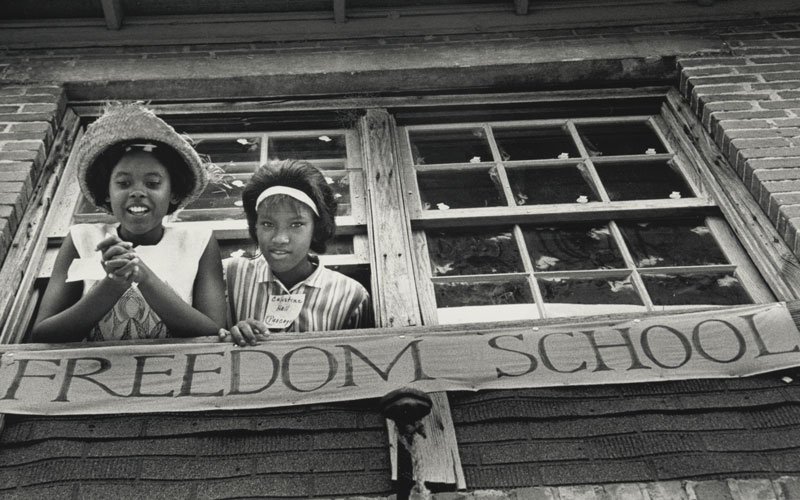
The history of American education is the history of spatial control. For context, in 1964, the Student Nonviolent Coordinating Committee established “Freedom Schools” because the state priority of Mississippi was the total exclusion of Black bodies and history as explained by Derek Alderman, a Chancellor’s Professor of Geography at the University of Tennessee (412). These were “alternative” schools in the revolutionary sense, designed to cultivate civic reasoning and resistance to White supremacist power structures.
Today, the “Alternative” schools in California or the “Vocational Voids” in Texas represent a new, subtler form of spatial control. They do not teach the “critical regional pedagogy” of the Freedom Schools (Alderman 414); instead, they often teach compliance and workforce readiness. As Liz Jackson, Professor of Education at the University of Hong Kong, argues, true “civic reasoning” requires educational spaces that value the student’s perspective (Jackson et al. 1131). By constraining school types to “Regular” (conforming) or “Alternative” (remedial), states inherently limit the potential in democratic education.
Conclusion
Regionally, these 5 state’s differences exhibit patterns in American education. Southern states like Georgia and Texas share tendencies toward minimal state-level investment, reflecting fiscal conservatism and the enduring legacy of resistance to federal educational mandates. Northeastern states like Massachusetts inherited strong traditions of public investment in education dating to the Common School movement of the 1800s, reflecting a progressive belief in instruction as equity. Midwestern innovators like Minnesota represent another path: education as a marketplace where competition drives quality, reflecting regional values of pragmatism and innovation.
Ultimately, these state-level differences reveal that the U.S. does not have a single education system, but fifty separate systems with separate values, each deciding who deserves a “Regular” education and who must find their way through the alternatives.
Synthesis
The three research questions – about student-teacher ratios, bureaucratic classification systems, and state priorities – converge to reveal how educational inequality is produced and maintained through interconnected geographic, administrative, and political mechanisms.
A student in rural Georgia experiences limited options not because of inevitable geographic constraints but because state funding formulas prioritize standardization, bureaucratic categories render specialized schools invisible or illegitimate, and historical disinvestment compounds over generations. A student labeled “Alternative” in California receives fewer resources not because they inherently require less but because state priorities treat them as problems to be managed rather than potential to be developed. A student in Minnesota navigates fragmented choice not because families naturally prefer competition but because state policies deliberately fostered educational markets over collective investment.
The implications for educational equity prove profound. First, we cannot address inequality simply by improving individual schools or boosting teacher quality in isolation. The interconnected systems that distribute students and resources demand direct confrontation. Second, what we measure shapes what we value: the NCES dataset’s categories become self-fulfilling prophecies, with “Regular” schools receiving the lion’s share of resources and attention while “Alternative” pathways suffer marginalization and underfunding. Third, state policy choices matter immensely – different approaches to school types, funding, and classification produce dramatically different opportunity structures.